In today’s digital world, focusing solely on keywords is not enough to stand out in search results. To truly succeed, you need to build topical authority. It means showing search engines that your content is reliable and explores topics in depth. Today, 88% of SEO experts recognise topical authority’s value, proving its relevance and competitive importance[1].
This is done through topical clusters where related pieces of content are linked around one main theme. This approach helps your audience find useful information easily and signals to search engines that you are an expert in your field.
Understanding Topical Clusters and Topical Authority
Topical Clusters and topical authority are two essential strategies for implementing the latest SEO techniques to boost your brand’s content marketing efforts. They help search engines recognise your website as an expert in a specific domain. Here are some of the basic characteristics of both:
Topical Clusters
Topical clusters group related pieces of content around a central, overarching theme. This structure helps search engines understand the depth and breadth of your coverage. It improves your chances of ranking for primary and long-tail keywords.
According to SEJ, 72% of B2B marketers considered content clusters a highly important SEO tactic in 2024–2025[2]. A strong topical cluster typically includes:
- Pillar Page: A comprehensive, high-level resource that covers the main topic thoroughly
- Cluster Content (Supporting Pages): In-depth articles that explore subtopics related to the pillar page
- Strategic Internal Linking: Links between the pillar page and supporting content signal topical relevance and helps distribute ranking authority
Topical Authority
Topical authority is achieved when your website publishes high-quality, interconnected content. By demonstrating depth, accuracy, and consistency, your domain becomes recognised as an expert by search engines. This increased credibility translates into higher rankings, better visibility, and improved user trust.
How Content Clusters Establish Topical Authority
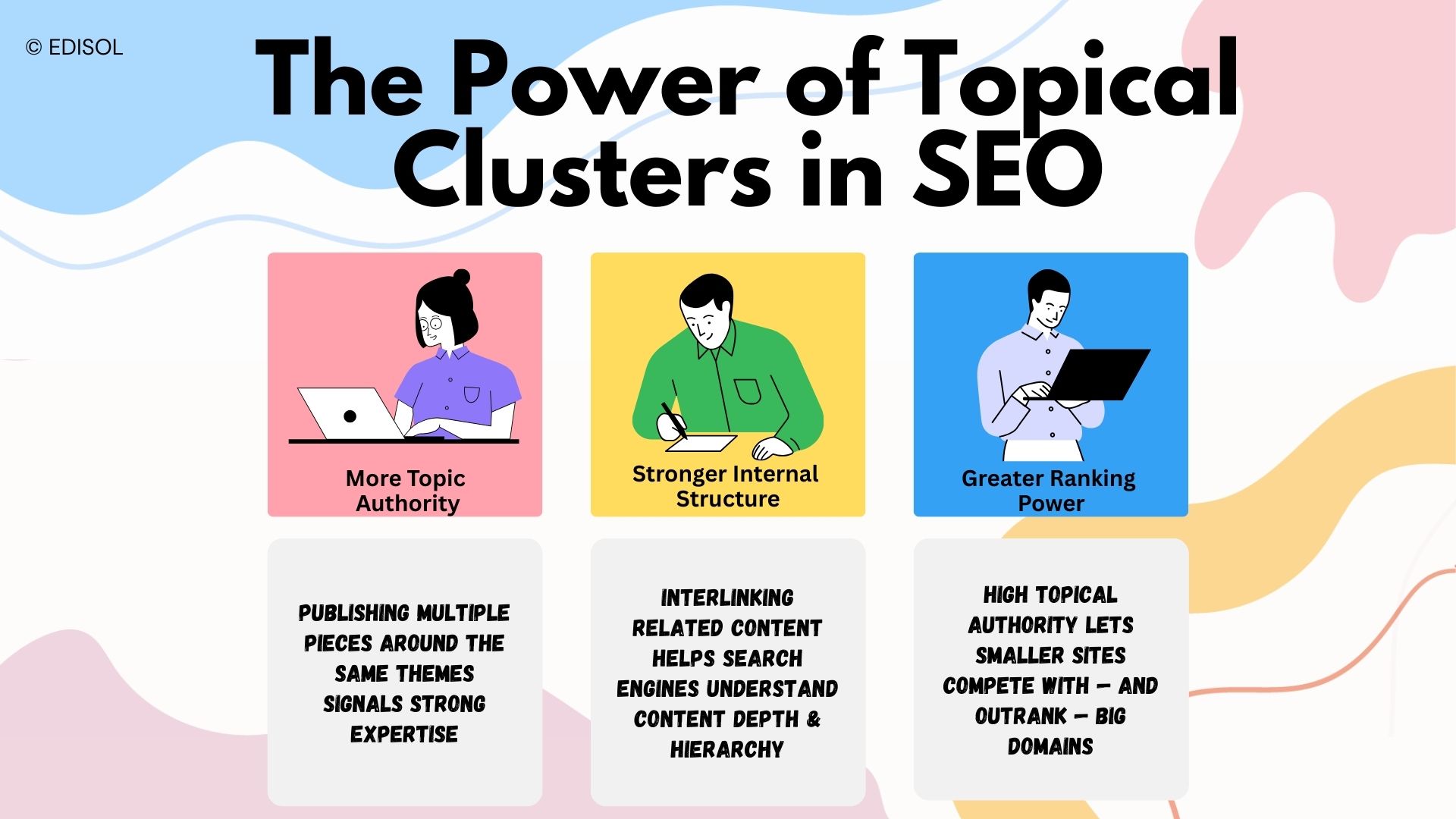
Content clusters organise related content around a central topic, which helps your website content become more trustworthy. This approach boosts SEO and improves user experience. Here is how you can implement it:
- Focus on a specific topic and cover it thoroughly with multiple related articles
- Interlink cluster pages to reinforce your website’s authority on the subject
- Increase the likelihood of higher rankings for related keywords in search results
- Provide users with a rich, organised resource that enhances their experience
How to Build Topical Authority in Easy Steps
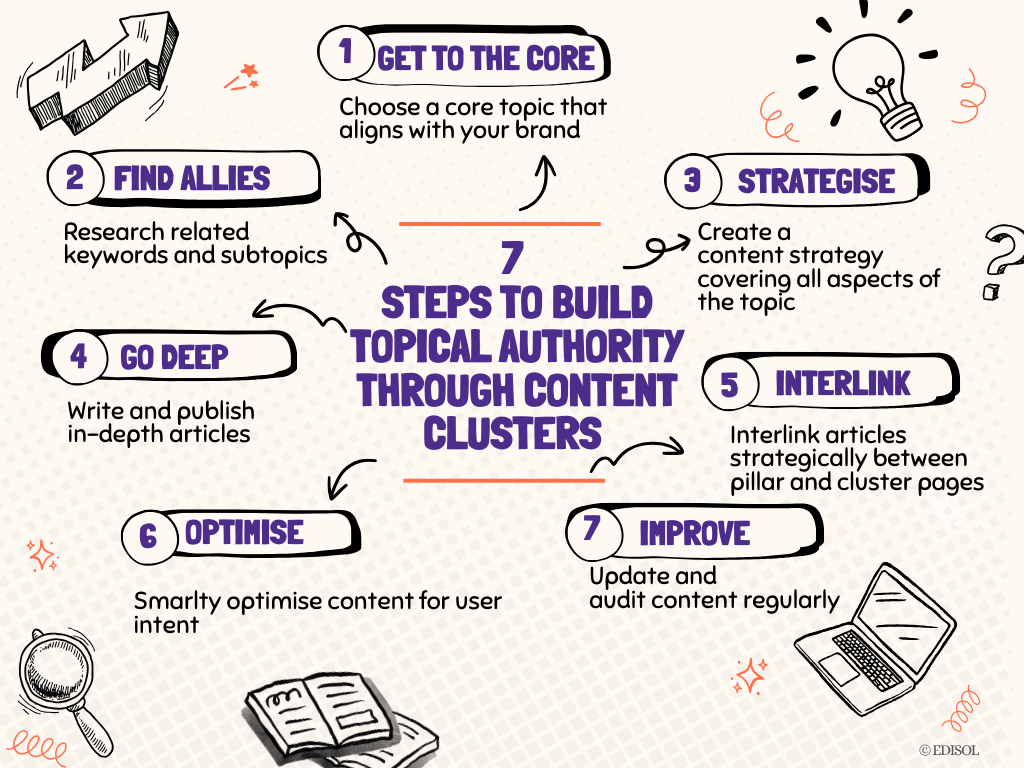
Creating high-quality articles and interlinking them around a topic is easy when you follow these steps:
Select a Topic
Choose a topic relevant to your brand and to your audience that can be written about in depth.
Do Keyword Research
Use tools like Google Keyword Planner to find related keywords and subtopics to target in your content.
Create A Content Strategy
Build a structured content plan that maps out all key subtopics within your main theme. This ensures consistent publishing and well-rounded coverage of the topic.
Write In-Depth Articles
Write long-form articles that cover a subtopic, providing your readers with valuable, comprehensive content.
Interlink Articles
Interlink your articles to create a cohesive content web that reinforces your topic authority. This will enhance user engagement and boost SEO. You can also support this effort by using content marketing to attract quality backlinks.
Pay Attention To User Intent
Make sure your on-page content aligns with your target audience, their search intent, needs, and answers.
Update Your Blogs Regularly
Keep your blog content fresh and current. Over time, even well-written articles can lose visibility due to changing search trends, user intent, or outdated information.
Benefits of Using Content Clusters for SEO
Clusters improve SEO performance and enhance user experience by organising content around topics. Key benefits include:
Improved Search Engine Rankings
Demonstrating expertise on a topic increases your chances of ranking higher for related keywords.
Increased Targeted Traffic
Attracts visitors interested in your topic, leading to better engagement and higher conversion.
Better User Experience
Well-organised clusters make it easier for users to navigate your site, reduce bounce rates, and increase time spent on your site.
How to Optimise Internal Linking in Content Clusters
Internal linking is crucial for strengthening your content clusters and boosting SEO. Strategic linking creates a network of related content. It signals authority to search engines and improves navigation.
Pillar to Cluster Linking
Link from your pillar page to each relevant cluster page using descriptive, keyword-rich anchor text.
Cluster to Pillar and Cluster Linking
Link from each cluster page back to the pillar page, as well as to other relevant cluster pages.
Natural Contextual Links
Use links naturally within your content, avoiding forced or excessive linking.
Routine Audits
Conduct regular audits of your internal links to ensure they are functional and update any broken or outdated links.
Developing topical authority through content clusters strengthens your overall content strategy. By organising related articles around a central theme, you make it easier for your audience to discover and consume valuable information. At the same time, this structure signals to search engines that your website has deep expertise in the topic.
At Edisol, we design content strategies that build topical authority and strengthen your SEO performance. Our approach helps you organise, optimise, and scale your content for sustainable, long-term results. Get in touch with us to take the next step towards measurable growth.
Frequently Asked Questions
Why are topical clusters important for SEO?
Topic clusters improve website structure and help search engines better understand content relationships. They increase the likelihood of ranking higher for related keywords, which makes it an important way to boost search engine optimisation.
How do topical clusters build authority?
By thoroughly covering a topic and interlinking related content, your site demonstrates expertise. It becomes a go-to resource for both users and search engines. This is a great way to improve website traffic and domain authority.
How does topical authority affect search rankings?
Search engines favour websites that are recognised as authoritative on a topic. Topic authority can improve rankings, visibility, and organic traffic for related keywords. By creating content that helps you build topical authority, you can boost domain authority and traffic.
How do I start creating a topical cluster?
Identify a core topic, create a pillar page that covers it in depth, and list related subtopics. Then create detailed cluster pages linked to the pillar page. This strategy ensures that your content has both depth and flow, attracting visitors.
How often should I update my topical clusters?
While there is no hard-and-fast rule, it is best to review and update content clusters to keep information current regularly. Add new subtopics, and ensure internal links and SEO remain effective.


