The future of search is going conversational as users increasingly speak naturally to devices. Over 27% of the global population uses voice search every month[1]. This data shows how quickly conversational search behaviour is becoming part of everyday digital life.
Conversational search changes how people ask questions and how results are delivered. Voice search is shifting from keywords to natural language. Users now prefer quick, direct, and human-like answers that feel more relevant and personalised.
To win in the conversational era, brands must adapt SEO and proven content marketing strategies for standout results. It will help match how users talk and search today.
What is Conversational Search?
Conversational search uses natural language instead of short and rigid keyword phrases. According to a study, around 58% of consumers use voice search to find local business information[2]. This data is also showing a rapidly changing search behaviour. Users now expect search engines to understand questions, intent, and conversational context.
Here are a few key features of conversational search:
- Understands human behaviour insights to boost content marketing engagement
- Interprets user queries like a human
- Comprehends user intent and context
- Retains information from previous interactions
- Enables multi-turn conversations
- Provides personalised search results
- Uses user preferences and behaviour
- Considers search history for relevance
- Delivers more comprehensive results
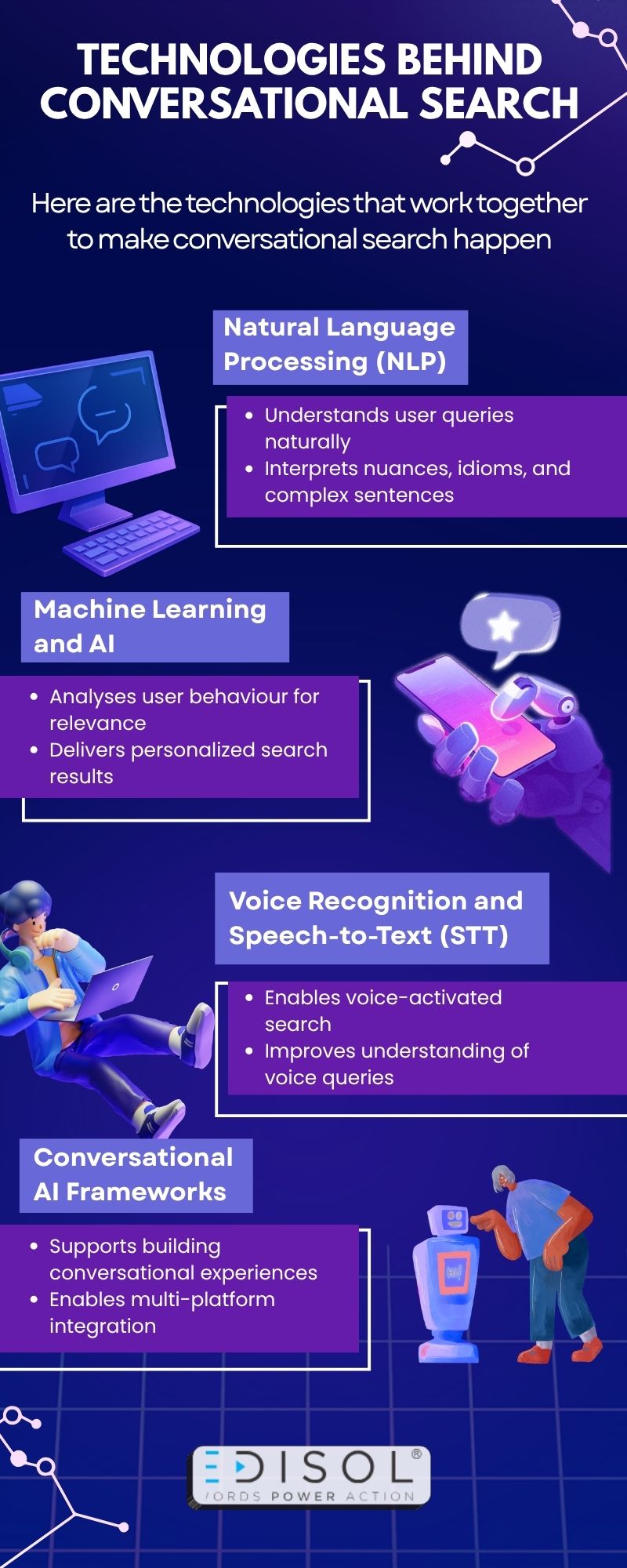
How Conversational Search Is Reshaping the Future of Search
Conversational search is changing how users find information by enabling natural, human-like interactions. It delivers smarter, faster, and more personalised results using AI and contextual understanding.
- Enhanced User Experience
Enables natural, human-like communication that feels easy and intuitive. Users can ask full questions and get faster, more relevant answers.
- Improved Relevance and Accuracy
Understands user intent and context using AI. This delivers more accurate and meaningful search results.
- Context Retention and Multi-Turn Conversations
Remembers previous questions and keeps context. Users can ask follow-up questions without repeating information.
- Personalised and Relevant Results
Uses search history and preferences. It delivers personalised and relevant results over time.
- Voice-Activated and Hands-Free Experiences
Conversational search supports voice-based queries. Users can search naturally without using screens.
- Efficient Customer Support and Self-Service
Conversational search helps users find answers independently. It reduces the need for human support agents.
How to Win in the Conversational Search Era Before Your Competitors Do
Search is shifting from links to direct answers. Gartner predicts that traditional search volume will drop 25% by 2026 as users move to AI chatbots[3]. This change means brands will lose visibility if AI systems do not reference their content.
In the conversational era, success depends on becoming a trusted source that AI engines can confidently cite. Winning now requires you to build stronger authority with topical authority and clusters. It also needs clear content structure, and strong contextual relevance.
- Own Topical Depth and Breadth
Create comprehensive content that covers topics in depth so AI systems can confidently cite you.
- Optimise for Search Intent
Focus on why users ask questions, not just what they type, and tailor content to match conversational queries.
- Build a Connected Content Ecosystem
Link related content so AI can understand the full context and thematic expertise of your brand.
- Track Brand Mentions and Visibility
Monitor where, when, and how AI systems are referencing your content to identify opportunities.
- Iterate Continuously
Update and refine content to reinforce signals that teach AI engines about your expertise over time.
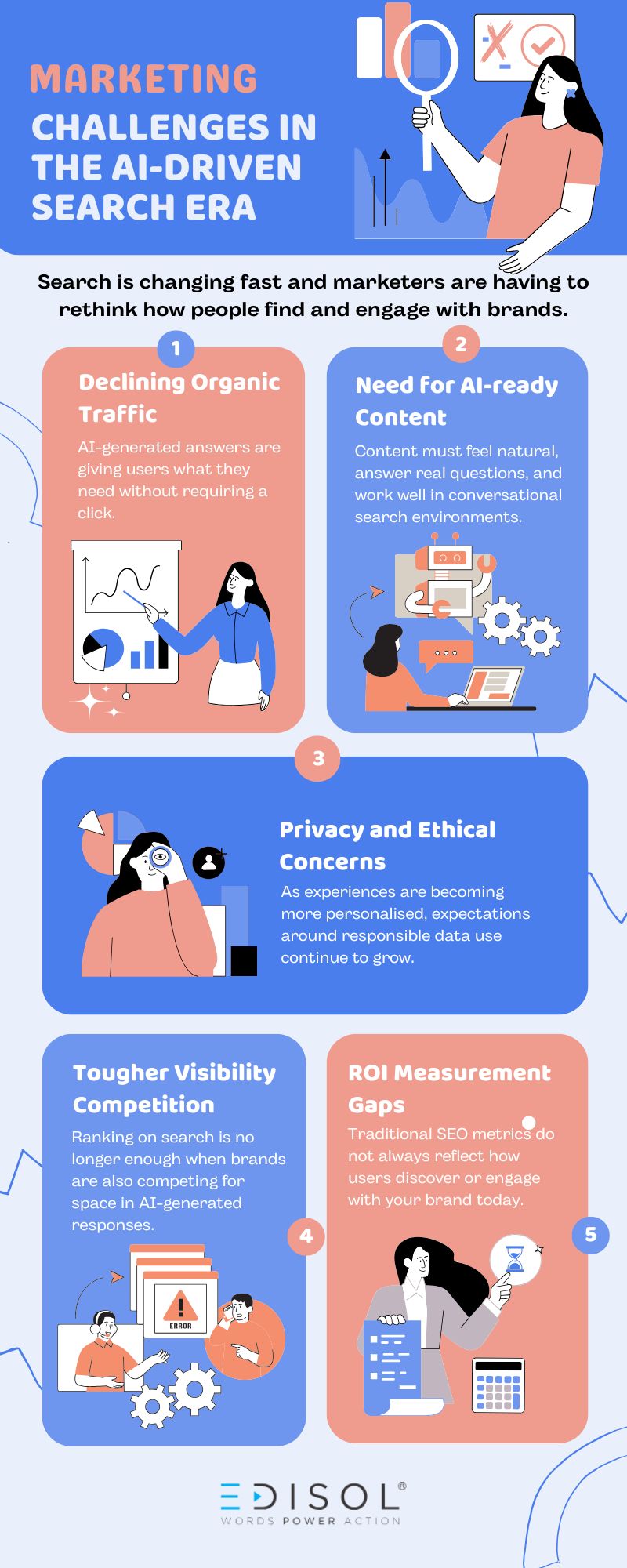
Future of Conversational Search and SEO
The future of search is becoming conversational, driven by AI, voice, and natural language understanding. Beyond 2026, search engines will act like assistants and deliver answers without traditional result pages.
AI-First Search Future
- Search engines will prioritise artificial intelligence over traditional keyword ranking systems.
- Results will be generated using intent, context, and conversational understanding.
Search Engines Will Act Like Assistants
- Search engines will behave more like personal digital assistants.
- They will guide users with direct answers instead of long result pages.
Search Without Screens
- More searches will happen through voice-only and audio-first devices.
- Users will receive answers without checking the website content or viewing the result pages.
Brand Authority in AI Answers
- AI systems will recommend only trusted and credible brands.
- Brand authority will influence visibility inside AI-generated answers.
Only Trusted Brands Will Be Recommended
- AI will filter content using trust, expertise, and reliability signals.
- Unverified brands will struggle to appear in conversational search results.
The future of search is moving toward conversations, not keywords. Users now expect instant and personalised answers instead of keyword-based results. This shift is redefining how content is discovered and recommended by search engines.
To win in the conversational era, brands must focus on intent, context, and topical authority. They must create content that AI systems trust and confidently reference in answers.
Edisol can help you build conversational SEO and content strategies for AI-first search. Contact us to stay visible and lead in the future of search.
Frequently Asked Questions
What is conversational search?
Conversational search allows users to ask natural language questions instead of isolated keywords. It maintains context across follow-ups to deliver more precise and relevant results.
Does conversational search affect SEO rankings?
Yes, conversational search changes SEO rankings by shifting focus from keywords to intent, context, and AI-friendly content. Here’s how:
- Prioritises natural, question-based content
- Focuses on user intent over keyword density
- Increases visibility in featured snippets
- Influences rankings in AI overviews
- Rewards topical authority and trust
How is conversational search different from traditional search?
Traditional search relies on keywords and static result pages. Conversational search delivers direct, contextual, and personalised answers.
What is conversational SEO?
Conversational SEO optimises content for natural, question-based queries instead of short keywords. It focuses on user intent and structured answers for voice assistants and AI chat tools.
Why is topical authority important for conversational SEO?
Topical authority helps AI trust your content and rank it for natural, intent-based conversational queries.
- Establishes expertise on a subject
- Improves rankings for natural questions
- Supports deeper context understanding
- Aligns with AI and the E-E-A-T strategies
- Strengthens long-term search visibility.
What is the future of conversational AI?
The future of conversational AI lies in multimodal, more natural interactions. Users will engage through voice, text, video, and even gestures. This shift will make AI more intuitive, helpful, and deeply integrated into daily life.
References
- https://www.affiliatebooster.com/google-search-statistics/
- https://reachskyline.com/the-rise-of-voice-search-and-what-it-means-for-your-business/#:~:text=Local%20SEO%20and%20Voice%20Search,visibility%20in%20local%20search%20results.
- https://www.linkedin.com/posts/rolandschegg_predicts-search-engine-volume-will-drop-25-activity-7346773750970785792-gzDF#:~:text=%22By%202026%2C%20traditional%20search%20engine,executed%20in%20traditional%20search%20engines.


