In today’s fast-moving and crowded fintech space, building a strong product is only the beginning. New tools and platforms launch every day, yet many never get noticed. Often, it is not the technology that falls short, but the way it is communicated. When content focuses more on features than on people, real users tune out.
Content that truly connects feels familiar, clear, and relevant. It speaks to everyday challenges instead of showcasing technical complexity. This difference matters.
Recent research shows 63% of marketers find relatable content most effective, outperforming trend-driven posts[1]. This is because people engage with what they understand and feel connected to.
For content to click and drive real impact, it needs more than information. It should offer clarity, meaningful insights, and a tone that invites readers in. When people feel understood, they pause, reflect, and engage. That is when fintech content stops being noise and starts building trust.
Why Blandly Technical Content Fails
Focusing solely on explainers with technical accuracy may alienate readers without specialised knowledge. Reduced engagement is sure to lead to a less-than-satisfactory customer experience. Other problems with purely technical content are:
Lack of Focus
Content that overlooks the reader’s background, objectives, or challenges becomes irrelevant. This makes it difficult for potential consumers to understand the information or apply it effectively.
Complex Terms
Excessive use of specialised terms, acronyms, or complex language can create barriers for readers unfamiliar with the subject. This may lead to frustration and reduce overall engagement.
Poor Structure and Accessibility
Dense technical content without clear explanations can limit readers’ ability to locate information. It can also hold back learning.
Abstraction and Lack of Clarity
Highly abstract writing blurs out the main message. It may reduce clarity and make the content challenging to comprehend, even for technically inclined readers.
Business Impact
Technical content that does not address practical user needs can increase support costs. It can also lower customer satisfaction and reduce trials.
Why Engaging Content Matters
In an industry defined by innovation and short attention spans, the choice of words often determines whether you are noticed or not. This is why the focus must remain not merely on technical communication but on content that resonates and relates. With it, fintech companies can start:
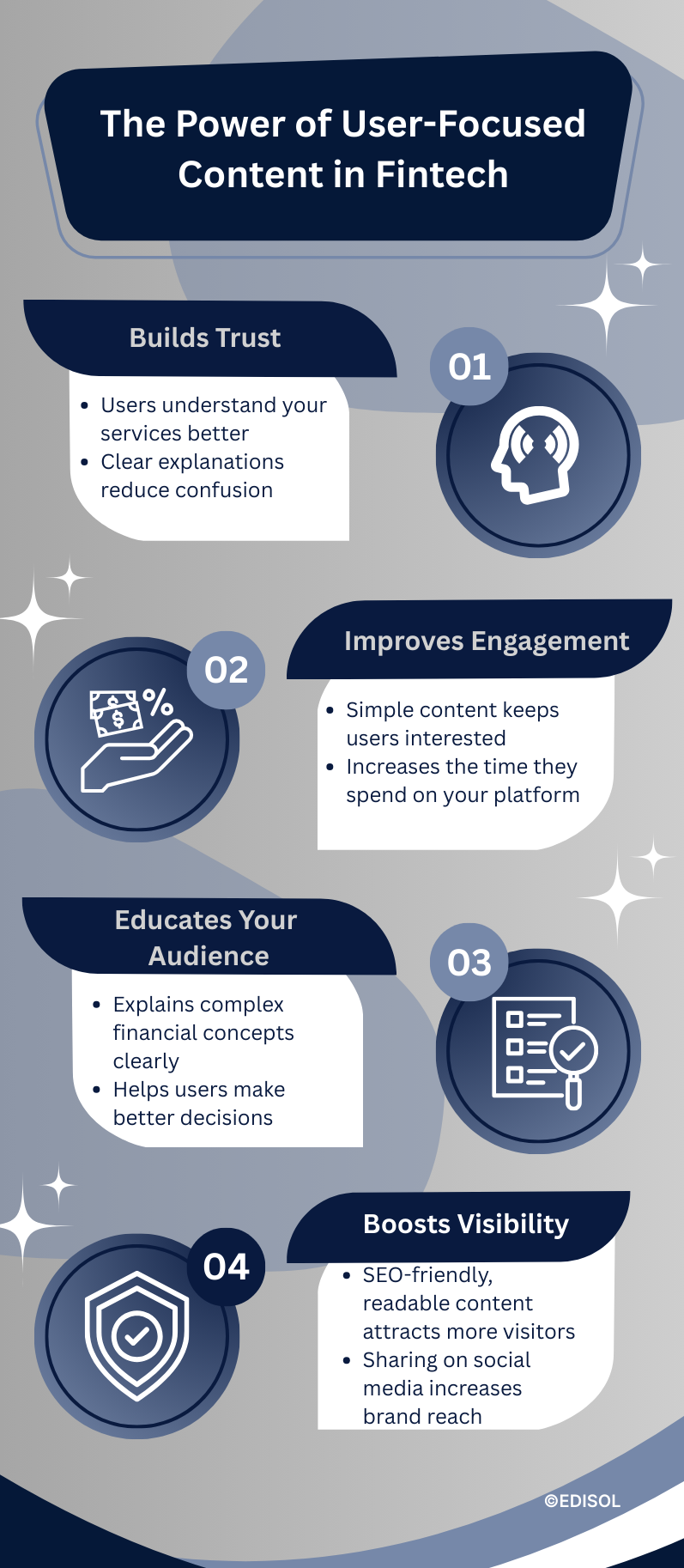
Building Trust and User Confidence
In the financial sector, security and transparency are paramount. Content acts as a bridge between complex products and customer understanding. Audiences seek reliable information that is clear, well-researched, and presented with integrity.
Fintech brands can build trust by:
- Providing practical insights through articles, Frequently Asked Questions (FAQs), and video content
- Offering actionable guidance that reassures users and sustains engagement
- Explaining complex financial terms in a simple and accessible manner
Attracting and Educating New Audiences
In the era of information overload, consumers seek reliable answers to queries. Providing high-quality, educational content can establish authority and trust. Effective strategies include:
- Publishing blogs, guides, and videos tailored to audiences at different levels of financial literacy
- Incorporating licensed content from reputable publishers to enhance credibility
- Developing content that serves as a dependable resource, encouraging audiences to return time and again
Offering Practical Insights and Advice
Financial content is often perceived as overly complex or unengaging. This can be addressed by:
- Using varied formats such as videos, listicles, articles, and creating infographics to boost content marketing efforts
- Exploring lifestyle-oriented topics such as saving for travel, weddings, or a first home
- Creating material that appeals to audiences across different levels of financial understanding
- Highlighting practical tips that users can apply immediately to their lives
Demonstrating Industry Authority
Publishing valuable, data-driven, and insightful content can position fintechs as trusted leaders. Advantages include:
- Enhanced credibility and trust among target audiences
- Greater brand visibility and sustained authority within the financial sector
- Recognition as a dependable source for timely updates and industry perspectives
Driving Growth and Generating Leads
High-quality content not only informs and engages but also delivers measurable business results. After all, content marketing costs 62% less than traditional channels while generating leads six times more likely to convert[3].
Key strategies to optimise financial content include:
- Optimising content for search engines (and LLM) to capture users with strong intent
- Guiding potential customers seamlessly through each stage of the decision-making journey
- Proactively addressing user queries with clear, practical, and actionable solutions
- Turning education into conversion by building trust
Tips for Diversifying Content
Effective content reach is key to standing out in the crowded fintech market. Many a fintech company may struggle due to:
- Mismanaged social media
- Lack of influencer relationships
- Neglect guest posting and outreach
This gap presents a clear opportunity to differentiate and lead. Here are the content distribution strategies you can leverage to reach a diverse audience:
Email Marketing
Well-planned newsletters that focus on insights, trends, and practical value help nurture long-term engagement. When email content prioritises relevance over promotion, it builds trust and positions your brand as a reliable source of information.
Social Media
Effective social media marketing requires authentic engagement rather than sharing links or promotions. Success is achieved by interacting, sharing relevant content, and contributing value to conversations. To save time, consider the art of powerful content repurposing to transform existing content into social media posts.
Influencer Marketing
Influencer partnerships allow fintech brands to extend their reach through voices that already have audience trust. Collaborating with industry experts on interviews or roundups adds depth to your messaging and introduces your brand to highly targeted communities.
Guest Posts
Publishing content on external platforms helps build professional relationships and reinforces authority. This approach also generates backlinks, increasing visibility among relevant audiences.
Communities
Engaging in relevant online communities creates opportunities for meaningful connections. By contributing insights and participating in conversations, rather than promoting products, brands can build credibility and long-term visibility within their target ecosystem.
There is no doubt that content plays a vital role for fintech companies. It helps build trust, informs users, boosts brand visibility, keeps brand voice consistent, and promotes business growth.
Relying solely on technical content without a distinct brand voice can confuse or distance audiences. On the other hand, purposeful, user-focused content cultivates the relationships needed to succeed.
At Edisol, we create fintech content strategies that connect with real users, build trust, and drive measurable results. Get in touch to see how our editors and strategists can strengthen your content marketing approach.
Frequently Asked Questions
How does user-focused content impact business growth for a fintech company?
Content that speaks to real user needs can increase engagement, reduce support costs, and drive conversions. By educating and guiding users, fintech companies can turn trust into measurable growth.
Why is balancing technical accuracy and relatability important in fintech content?
While accuracy builds credibility, overly technical content can overwhelm or confuse readers. Striking a balance ensures content is trustworthy and easy to read. This helps users make informed decisions.
What types of content work best for fintech companies?
Content that combines clarity, practicality, and relatability works best. Examples include blogs, FAQs, videos, infographics, lifestyle-oriented articles, and data-driven insights that users can apply immediately.
How can fintech companies distribute content effectively?
Diversified content distribution channels, like email newsletters, social media, influencer collaborations, guest posts, and online communities, ensure your content reaches and resonates with a broad audience.
What common mistakes should fintech companies avoid in content creation?
Common mistakes include focusing solely on technical accuracy, using dense jargon, ignoring user needs, poor content structure, and neglecting content distribution strategies. These errors can confuse users and reduce engagement.


