In a market where almost 80% of fintech brands offer similar features[1], standing out has become a challenge. Great products alone are not enough to win trust. What truly shapes the user experience is how clearly your app or platform communicates, especially during critical moments like onboarding, KYC, and transactions.
UX-driven content links your product’s features to what users really need at each step of their journey. It simplifies complex financial processes, guides users through in-app actions, and reduces friction during key interactions.
From sign-up to their first transaction, the right content helps users feel confident, builds trust, and drives meaningful engagement. In fact, recent surveys suggest that about 72% of users would switch their banks and financial service providers[2] for a better experience.
Why UX-driven Content Matters Within Fintech
The success of any fintech platform or application depends not merely on its design but also on the content that guides users through it. UX-driven content explains features and helps users navigate financial journeys with confidence.
By making information or the next steps easy to understand and perform, it does 2 key things:
- Builds trust
- Ensures a smooth user experience
This is how user-focused content drives growth in fintech content marketing — by guiding users through key actions and reducing friction across the journey.
UX Content in Fintech Apps: Where It Actually Works
UX-driven content appears at every critical step in a fintech app. From the moment a user signs up to completing a transaction, each interaction depends on clear, contextual content to guide decisions and reduce friction. These key touchpoints define how users experience your product:
- Onboarding Screens: Clear, value-led content sets expectations and guides users through the first steps without overwhelm
- KYC Flows: Simple instructions and reassurance messaging reduce hesitation when users share sensitive information
- Dashboard Guidance: Short prompts and tooltips help users understand features and take actions with confidence
- Action Prompts (CTAs): Clear, action-oriented copy guides users on what to do next, whether it’s completing KYC, making a payment, or exploring features
- Error Messages: Clear, actionable messages help users recover quickly instead of dropping off
- Empty States: Helpful prompts in empty states (e.g., no transactions or no balance) guide users on how to get going instead of leaving them stuck
- Transaction Confirmations: Concise confirmations reassure users and clarify what happens next
- Trust and Security Messaging: Contextual reassurance (e.g., “Your data is securely encrypted” or “We use advanced security to protect your data”) reduces anxiety during sensitive actions
Key Benefits of UX-Driven Content
Short and simple content helps users trust the platform, stay engaged, and complete actions.
Improves User Engagement
A smooth, intuitive experience keeps users active and encourages repeat interaction.
Enhances Trust
A clean, professional interface builds confidence and reassures users of the app’s reliability.
Leads to Higher Conversion
Streamlined journeys make sign-ups, transactions, and other key actions effortless. Streamlined user journeys can drive conversion rates up to 35%, positioning you ahead of competitors[3].
Reduces Friction
Clear navigation and well-structured content simplify the experience. It helps users find what they need quickly.
Core Strategies for UX-Driven Content in Fintech
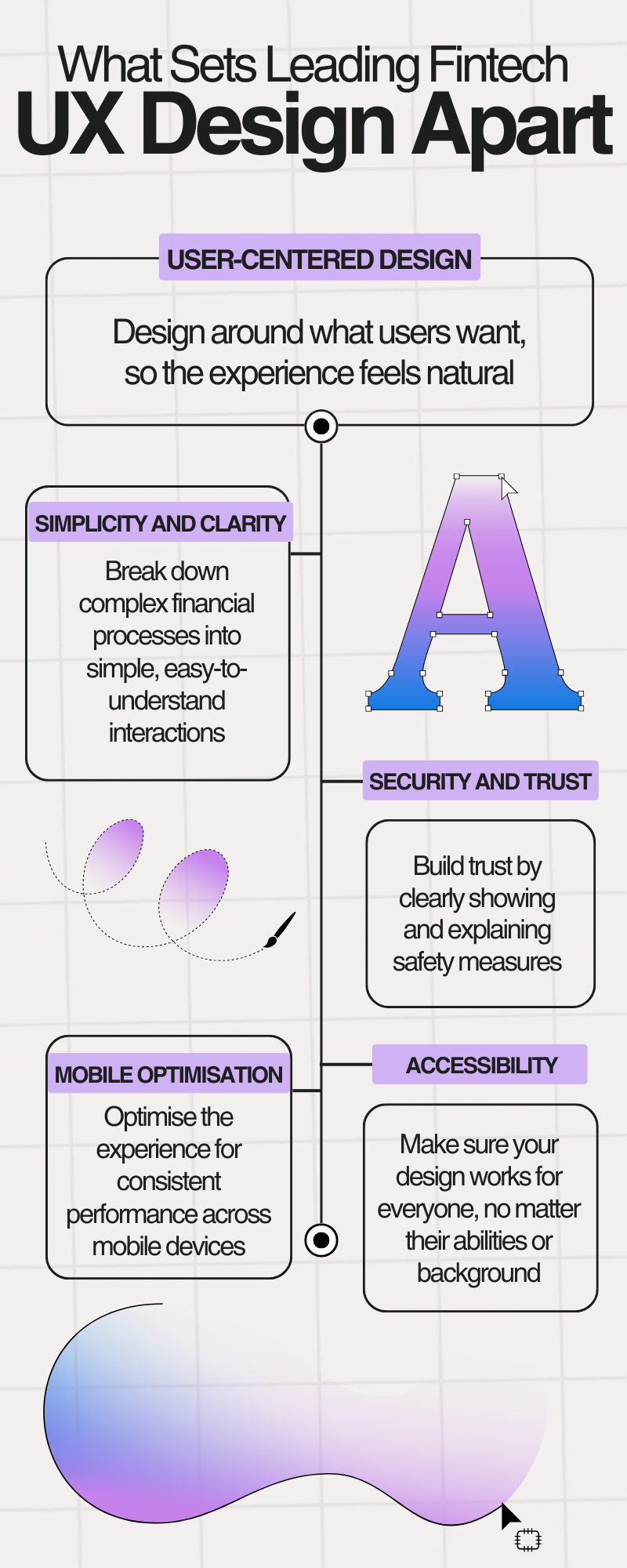
Up to 70% of users drop off fintech apps due to complex navigation[4]. Design and content must thus work together to keep the user glued, take action, and continue the journey. Here are some UX principles that help transform digital finance platforms into intuitive, human-centred experiences:
Adaptive User Interfaces
Adaptive interfaces help make fintech platforms more intuitive for each user.
- Personalise the platform based on user behaviour
- Adjust content and layout according to financial literacy
- Tailor interactions to the user’s context for a seamless experience
Clarity and Visual Hierarchy
Clear visual hierarchy helps users understand financial information quickly and navigate fintech platforms with confidence.
- Organise information using size, colour, and placement to highlight priorities
- Maintain consistency with your brand’s visual identity
- Structure financial data so users can easily scan and interpret key information
Conversational Content
Human-first content makes fintech interactions feel simple, natural, and engaging.
- Use AI chatbots to guide users
- Implement voice assistants for easier interaction
Invisible Security
Strong security is essential in fintech, but it should never disrupt the user experience.
- Implement AI-powered fraud detection in the background
- Apply tokenised authentication to protect sensitive data
- Use biometrics for seamless authentication
Continuous User Feedback
Regular user feedback helps fintech platforms improve experiences and stay aligned with evolving customer needs.
- Collect feedback through usability tests
- Analyse drop-off points to redesign
- Refine product experiences based on user insights
Fintech Content Marketing Best Practices
When building a strong content marketing strategy, fintech companies need UX-driven content that clearly informs and guides users at every step. Here are some best practices to consider:
Be Transparent
Clearly communicate your products, services, pricing, and data practices. Use in-app microcopy, which is the short text seen on buttons, tooltips, error messages, and form fields.
Use these during onboarding, KYC, and transactions to explain why information is needed and how it is used. Transparency around privacy and security builds credibility and lessens user hesitation.
Take an Education-first Approach
Create value-driven, step-wise content tailored to your audience’s needs. Embed guidance within the app, such as walkthroughs and contextual help. This will help simplify actions like payments, investing, or credit usage.
Leverage the Right Content Tools
Use project management tools to plan workflows, track deadlines, and manage approvals. A content management system (CMS) helps you create, update, and organise content efficiently. Together, these tools improve consistency, speed, and performance tracking.
Track User Behaviour
Track in-app metrics such as drop-offs, completion rates, and user flows. Share content on multiple channels, like blogs, newsletters, and social media to maintain consistency across touchpoints.
Monitor social media, email, and website performance to measure progress. Use these insights to refine content, improve clarity, and remove friction from key journeys.
Establish a UX Content Leader
Designate a UX writer or content owner to manage in-app copy, consistency, and user guidance. This ensures all content aligns with product experience and user needs.
Optimise for Clarity, Not Just SEO
Prioritise clarity and action-oriented language within the app. Content should help users complete tasks quickly rather than optimise for search engines.
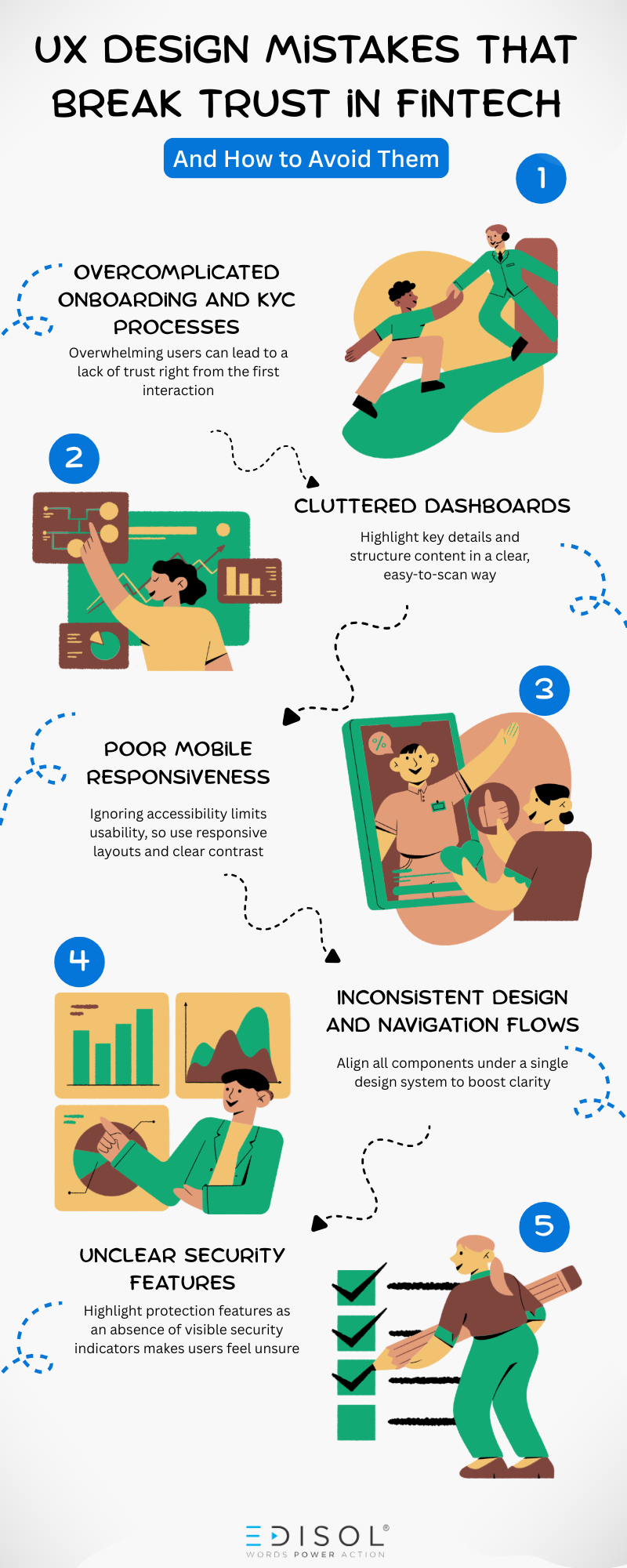
In the competitive world of fintech, UX-driven content can make all the difference. Clear, engaging, and user-focused content simplifies complex financial tools and builds customers’ trust.
At Edisol, we help fintech brands craft content strategies. Our teams blend UX insights and content marketing expertise to create meaningful user experiences. Let’s transform your fintech content into a powerful tool that guides users, builds loyalty, and grows your business. Get in touch with Edisol today.
Frequently Asked Questions
What is UX in fintech?
UX-driven content focuses on designing simple, secure, and intuitive digital financial experiences. It removes friction and builds trust by making complex tasks easy for all users. UX content normally appears during onboarding, KYC, sign-ups, other transactions that users undertake on a fintech platform.
What does UX mean in banking?
UX in banking means designing digital user experiences that are easy, secure, and emotionally positive. It simplifies financial tasks, builds trust, and turns digital platforms into primary customer touchpoints.
What is fintech UX?
Fintech UX focuses on designing digital financial products that are intuitive, secure, engaging, and trustworthy. It simplifies tasks like payments or investing, creating seamless, confidence-building user experiences.
What are the 4 Cs of UX design?
The 4 Cs of UX design are Consistency, Continuity, Context, and Complementary experiences. They ensure seamless, user-friendly journeys across platforms with clear, unified interactions.
References
- https://monsoonfish.com/ux-design-for-fintech-an-experts-guide/
- https://yellowslice.in/bed/fintech-ux-design-trends-you-must-know/#:~:text=The%20Fintech%20UX%20Design%20Trends%20has%20emerged%20as%20the%20fastest,insights%2C%20and%20examples%20accompanying%20them
- https://monsoonfish.com/ux-design-for-fintech-an-experts-guide/
- https://yellowslice.in/bed/fintech-ux-design-trends-you-must-know/#:~:text=The%20Fintech%20UX%20Design%20Trends%20has%20emerged%20as%20the%20fastest,insights%2C%20and%20examples%20accompanying%20them


