Interactive content is quickly becoming a game-changer for modern businesses. Instead of simply giving users information, it invites them to take part through quizzes, calculators, or interactive maps, or scrollytelling articles. It generates about 52.6% more engagement than static content[1].
At the same time, it gives brands something more valuable than clicks. Over 80% of marketers agree that interactive content grabs attention more than traditional formats[2]. It helps brands stand out and deepen audience involvement.
As traditional data sources are fading, interactive content helps brands understand customer needs. It has now made its place in the list of proven content marketing strategies for standout results.
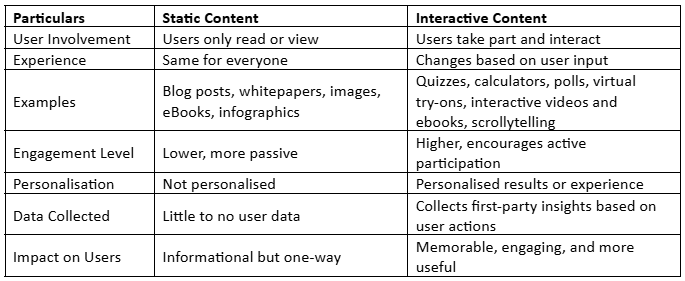
Interactive Content vs Static Content
Interactive content tends to generate 2X more engagement than passive content[3]. Users end up spending more time interacting with your brand’s messages.
Here is a look at the features and performance of interactive content vs static content in brief:
Benefits of Integrating Interactive Content
This type of content is not just more fun for readers or users. It delivers real business benefits across engagement, data collection, conversions, and brand experience. Here are a few benefits of interactive content:
- Boosts content marketing engagement when created keeping human behaviour insights in mind
- Helps users remember information better by involving them in the experience
- Collects first-party data through quizzes, surveys, calculators, and other tools
- Increases shareability on social platforms because interactive experiences feel fresh
- Improves conversion rates by guiding users smoothly toward actions like signups and downloads
- Enhances brand perception by showcasing innovation and taking a customer-first approach
How to Create Interactive Content
Creating effective interactive content takes planning and the right tools. Here is how you can create it:
1. Define Your Audience and Goals
Identify who you want to reach and what you want to achieve, such as leads, engagement, or better data. Match the format to the user’s needs and buyer journey stage.
2. Choose the Right Format
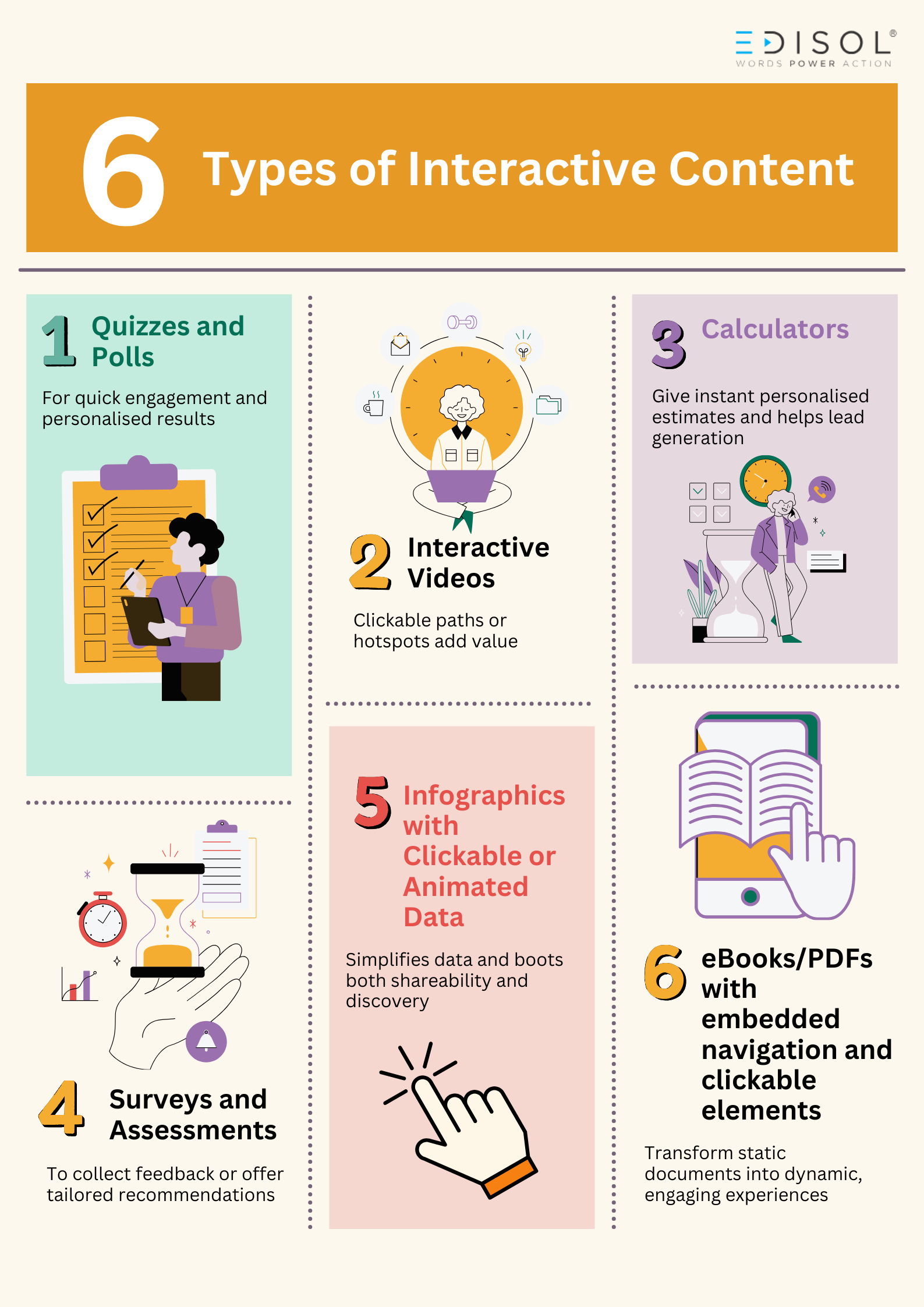
- Choose from 3 long-form content formats that boost traffic
- Publish quizzes for personalisation and lead capture
- Design calculators for decision support
- Use interactive videos and narratives for storytelling
3. Select Tools and Platforms
Choose no-code tools that suit chosen format and technical skill levels. Use platforms that support analytics, CMS embedding, and SEO tracking.
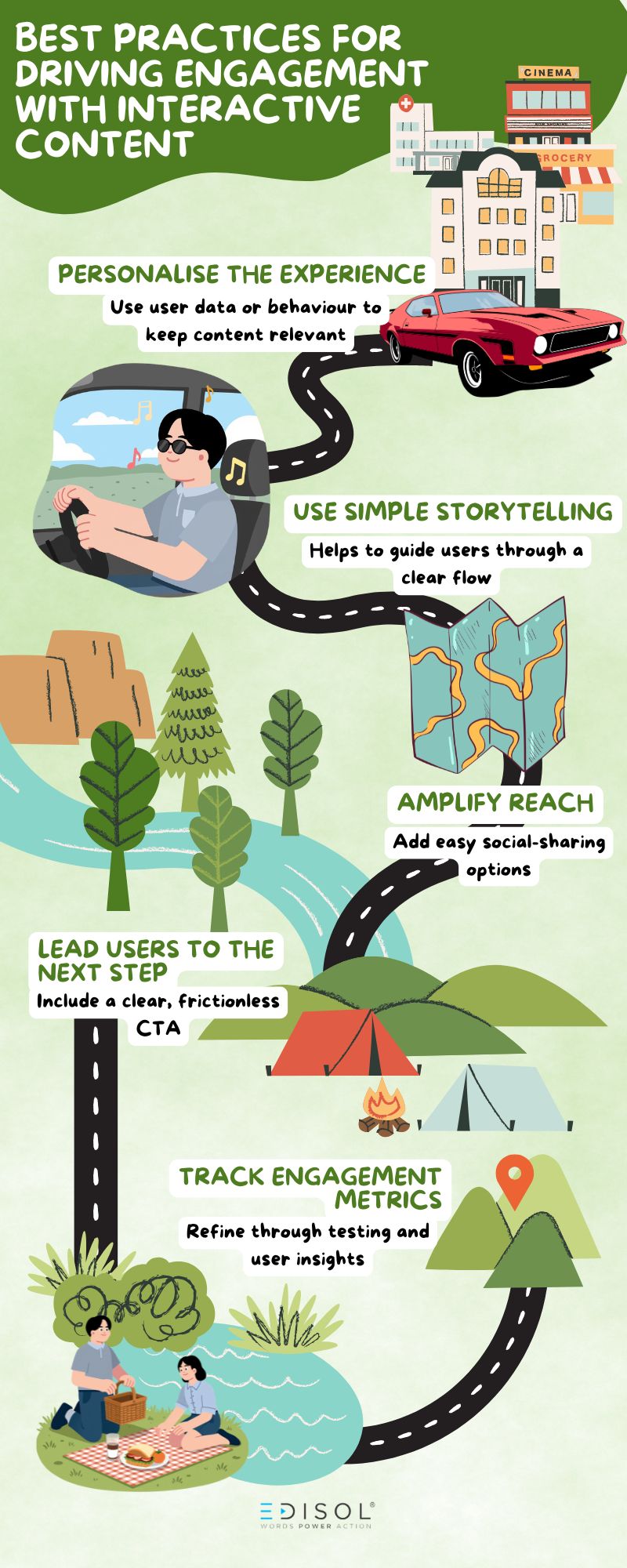
4. Focus on Simplicity and Good UX
Keep layouts clean, instructions clear, and loading speeds fast. Prioritise mobile-friendly design. Reduce friction by minimising inputs, using progress indicators, and ensuring everything feels intuitive.
5. Launch, Test, and Improve
Start with a basic version, run A/B tests, and track metrics like completion rate and engagement.
- Study heatmaps and drop-off points
- Review user feedback
- Refine copy, visuals, or flow based on behaviour
6. Integrate with Your Campaigns
Add interactive content to blog content, emails, landing pages, and social channels. Promote it across search, social, email, and paid ads for maximum reach and ROI.
How to Use Interactive Content in Digital Marketing
Interactive content can fit into many parts of your marketing content strategy and make campaigns feel more engaging. Here are simple ways to plug interactive content into your marketing strategy:
-
Lead Nurturing
- Use a quiz or calculator instead of a generic form
- Users get instant results, and you collect more meaningful data
-
Email Marketing
- Add a poll or mini quiz to make email marketing feel more interactive
- Responses can feed into your CRM for better personalisation
-
Social Media
- Use Instagram polls, LinkedIn quiz posts, or interactive reel formats
- These boost content engagement and encourage shares for more organic reach
-
Ads and Landing Pages
- Promote a quiz or calculator in ads to increase clicks
- Add an interactive element on landing pages to reduce bounce and improve conversions
Interactive content has become a powerful way for brands to stand out in a crowded digital world. From strategy to execution, Edisol's experienced team can help you build experiences that drive engagement. Get in touch with us today to know how we can help you boost your reach and engagement.
Frequently Asked Questions
1. How does interactive content improve engagement?
Interactive content boosts engagement by involving users to participate. When people click and scroll, they spend more time with the content and are more likely to remember the experience.
2. Why is interactive content important for first-party data?
It allows brands to collect data directly from users through voluntary interactions. This helps businesses gather accurate, first-party data without relying on third-party cookies.
3. What types of interactive content are most effective?
Some of the most effective formats include:
- Quizzes
- Interactive infographics
- Calculators
Each serves different goals such as engagement, lead generation, or personalisation.
4. Can interactive content help with lead generation?
Yes, Interactive content often converts better than static content. Users often share information in exchange for personalised results.
5. Is interactive content suitable for all industries?
Yes, interactive content works across industries such as:
- Education
- Healthcare & Cosmetics
- Finance
- SaaS
- E-commerce
References
- https://www.forbes.com/sites/forbescontentmarketing/2024/06/20/engage-your-audience-with-interactive-content/
- https://www.forbes.com/sites/forbescontentmarketing/2024/06/20/engage-your-audience-with-interactive-content/#:~:text=81%25%20of%20marketers%20agree%20that%20interactive%20content
- https://www.amraandelma.com/top-interactive-content-marketing-statistics/


