AI-generated content is now part of everyday business operations. From blog articles and email campaigns to internal reports and social media posts, AI content creation tools are helping teams produce material at scale.
According to the 2023 McKinsey Global Survey on AI, 55%[1] of organisations report using AI in at least one business function. Marketing and communications are among the most common areas of adoption. The opportunity is clear. AI-generated work can save time, increase output, and support creative ideation.
But there is a growing concern that many businesses are starting to recognise. It is often referred to as “workslop.”
It is low-quality AI-generated content that looks polished but lacks depth, clarity, and strategic intent.
When organisations rely too heavily on automation without strong editorial oversight, generative AI risks begin to surface.
Nowadays, it is important to understand how the misuse of AI can lead to poor quality, wasted time, and reputational damage.
AI-Generated Workslop: The Hidden Cost of Lazy Automation
AI-generated workslop is low-quality AI-generated content that:
- Repeats generic information already available online
- Uses confident language without verified facts
- Misses context or industry nuance
- Lacks a clear audience focus
- Fails to align with brand tone
On the surface, it looks structured. It has headings. It sounds professional. But when you read closely, it may offer little substance. The issue often begins when AI-generated work replaces human thinking instead of supporting it.
What AI-Generated Workslop Means for Your Organisation
AI-generated workslop may not look like a major issue at first. The document appears complete. The blog has structure. The captions sound polished. But the impact shows up over time.
According to research by Gartner, poor data quality costs organisations an average of $12.9 million [2] per year. This highlights why maintaining accuracy and reliability is critical for long-term performance and decision-making.
Here is how AI-generated workshop can negatively impact your organisation or business:
Productivity Slowly Drops
One of the first signs is reduced efficiency. When low-quality AI-generated content enters the workflow:
- Senior team members spend time rewriting sections
- Facts need to be rechecked
- Missing context must be added
- Arguments have to be strengthened
Brand Voice Becomes Inconsistent
AI-generated work does not always understand tone, nuance, or positioning. If different employees rely heavily on automation without alignment:
- Messaging starts to feel disconnected
- The brand voice shifts from piece to piece
- Communication loses its personality
Authority and Search Performance Decline
Repeated publication of shallow AI-generated content can affect long-term positioning. Possible outcomes include:
- Lower engagement rates
- Reduced credibility in the industry
- Weak search visibility
- Fewer meaningful enquiries
How to Prevent AI Workslop
There are many ways you can realise the advantages of using AI to generate leads while crafting error-free content. The key is to use AI thoughtfully and verify the output before sharing it. You can reduce the risks of AI-generated work by incorporating these tips:
Be Responsible for Your Content
Most AI policies suggest that users be responsible for the content they create. Sometimes, the person generating or publishing it may not have the expertise to review AI-generated content. In such cases, relying on that output without proper review increases the risk of workslop.
Get Content Reviewed by an Expert
It is often helpful to have the content reviewed by someone with stronger subject knowledge or experience. Fact checking, source checking and few reviews are a necessary part of this process.
Set Clear Quality Standards
Clearly define what good-quality content looks like. Clear, well-structured writing reduces the chances of publishing weak or misleading material. Clear writing is crucial, as poorly written content can hurt your business.
Avoid Direct Copying
Even when AI is used for research or drafting support, copying text directly should be avoided. AI outputs should guide ideas, not replace original thinking or proper editing.
Verify and Cite Sources
When AI tools reference data, examples, or links, check that the sources are accurate and credible. Properly verifying and citing information improves reliability.
Maintain Transparency in AI-Generated Work
If content includes AI assistance, be transparent about it where necessary. Clear disclosure builds trust and ensures accountability.
Use AI as a Support Tool
AI works best as a support tool, not a replacement for effort. Completing your own draft first and then using AI for refinement or suggestions can improve quality while keeping control over the final output.
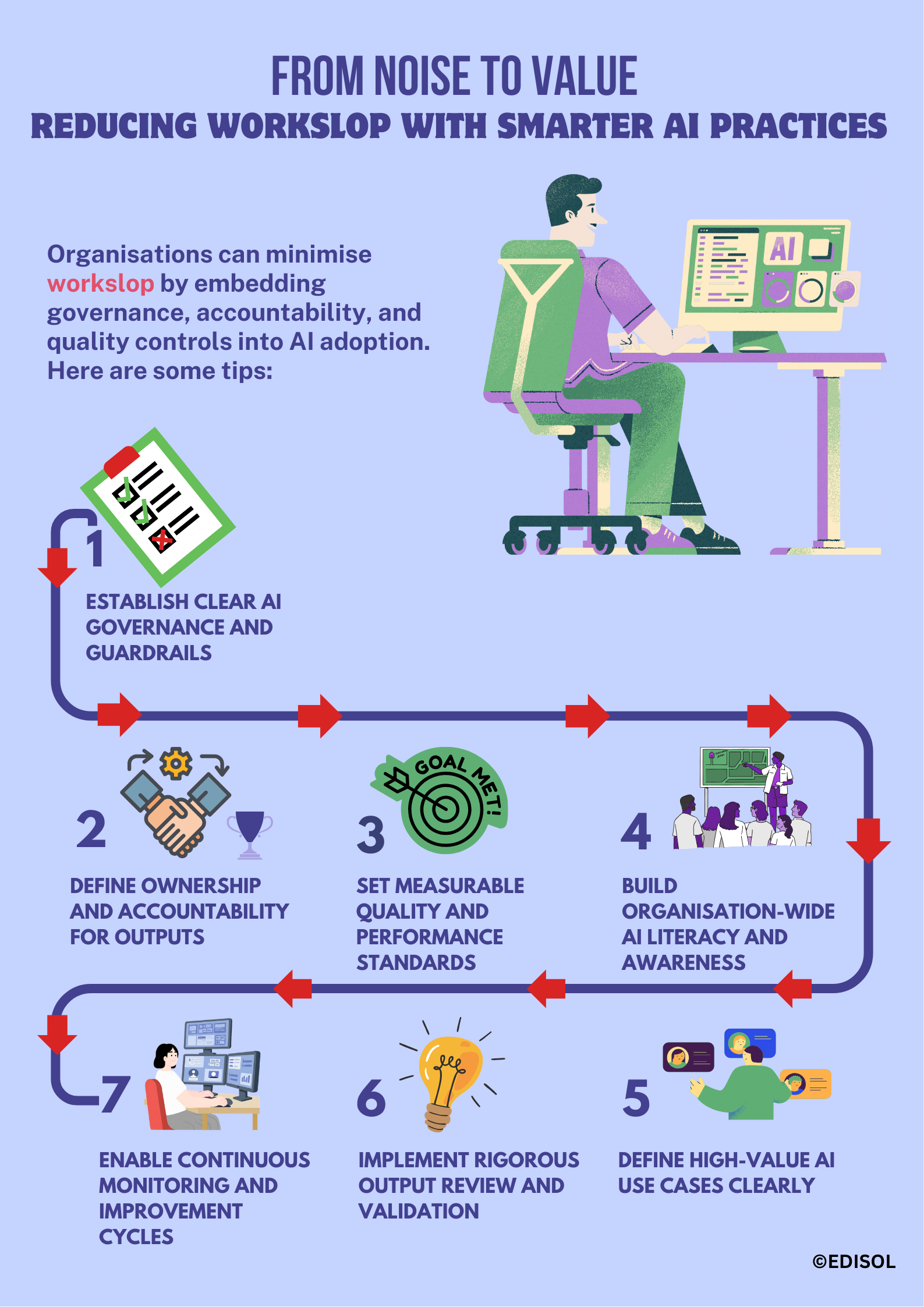
Being aware of workslop and taking steps to manage it can help support clearer communication and more consistent content performance.
At Edisol, we explore the underlying causes of workslop and how brands can approach AI tools to produce more accurate and reliable content. Connect with our team to learn more about managing workslop and using AI as a collaborative tool to support and maintain the quality of your work.
Frequently Asked Questions
What causes an AI workslop?
Workslop occurs due to a lack of experience and expertise among employees and pressure to produce a large amount of content. It is also due to relying too much on tools for AI content creation and not disclosing the usage of AI tools to your seniors or supervisors.
Why is AI workslop a problem for brands?
Workslop leads to misinformation, decreases productivity, and increases cleanup time for senior staff. It can result in reputational or legal consequences if you share inaccurate content with the clients.
How to avoid AI workslop?
You can avoid AI workslop by verifying every output and enforcing strict editorial standards. Treat AI as a junior assistant and prioritise value over speed. Build AI literacy and ensure transparent, responsible content practices.
How can you tell if content contains AI workslop?
Signs include vague statements, repetitive phrasing, incorrect facts, missing sources, or content that does not fully address the topic.
How can transparency improve AI content quality?
Being open about AI usage encourages accountability and ensures content is handled with proper review and responsibility.
[2] https://www.gartner.com/en/data-analytics/topics/data-quality


